


WhatsApp is taking another major step into the world of artificial intelligence with a new feature designed to give users more privacy while interacting with AI.
The popular messaging platform is introducing incognito conversations for AI chats. The feature is aimed at people who want to use artificial intelligence while having greater control over their private conversations and digital history.
Artificial intelligence has quickly become part of everyday life. People now use AI for education work research writing creative ideas planning and many other tasks. However the rapid growth of AI has also created new concerns about privacy and personal data.
Many users are comfortable asking AI simple questions. Others may hesitate when the conversation involves personal information private ideas financial matters emotional topics or other sensitive subjects.
WhatsApp is attempting to address some of these concerns by creating a more private environment for AI conversations.
The new feature could become an important part of the company’s wider AI strategy. It could also influence how other messaging platforms approach privacy as artificial intelligence becomes a normal part of digital communication.
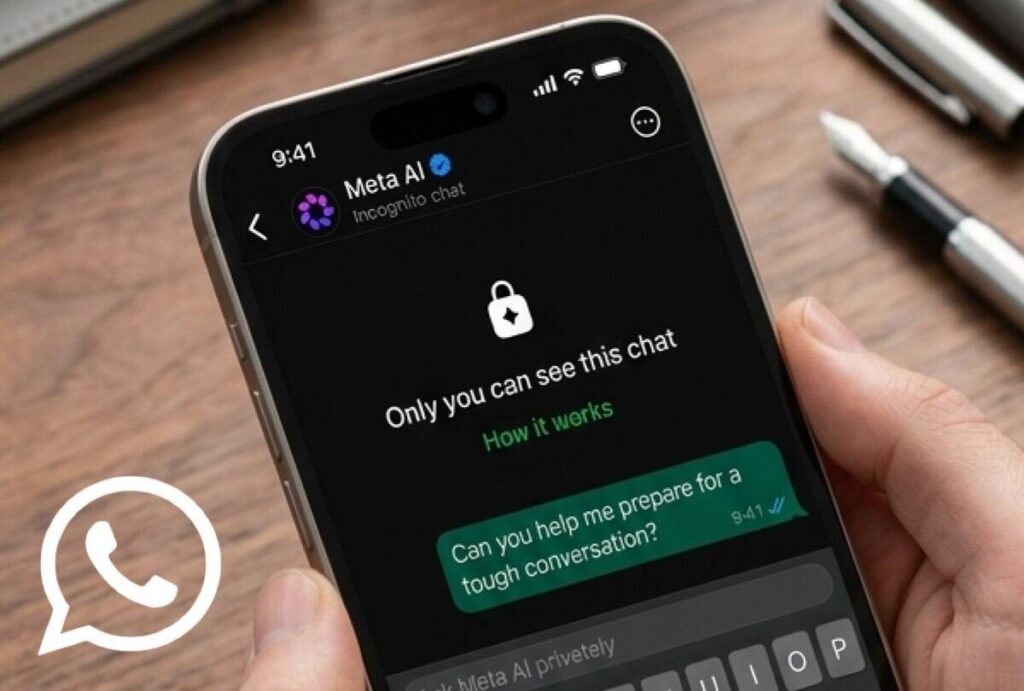
What Is Incognito AI Chat
The basic idea behind incognito AI conversations is simple.
Users can start a separate AI conversation that is designed to be more private and temporary than a normal chat. Instead of becoming part of the regular conversation history these sessions are intended to provide a more temporary experience.
This gives users greater control over their interaction with the AI assistant.
People can use the feature to ask questions receive information explore ideas or get help from AI without wanting the conversation to remain as a permanent part of their normal chat history.
This approach could be especially useful for people who want to experiment with AI without creating a long lasting digital record.
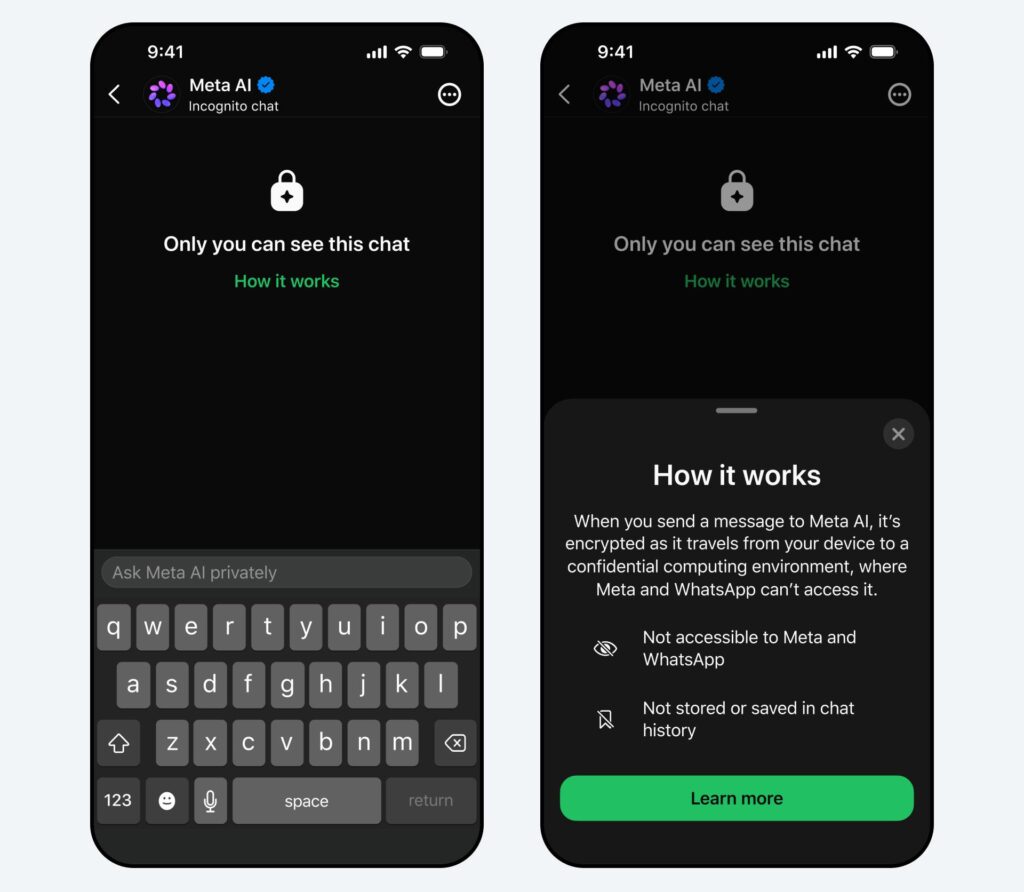
Why Privacy Matters for AI
Privacy has become one of the biggest issues surrounding artificial intelligence.
AI systems can be extremely useful but people also want to understand what happens to the information they provide.
Users may have different reasons for wanting greater privacy.
• They may not want personal questions stored
• They may want temporary conversations
• They may want greater control over their digital history
• They may have concerns about sensitive information
• They may simply prefer a private AI experience
As AI becomes more advanced these concerns are likely to become even more important.
People are no longer thinking only about what AI can do. They are also asking how their information is handled while using it.
WhatsApp Wants Users to Feel Safer
WhatsApp has built much of its reputation around private communication. The company has promoted end to end encryption as an important part of its messaging service.
Now the platform is extending its privacy focused approach into artificial intelligence.
The company appears to understand that some people may be interested in AI but still feel uncomfortable using it for personal conversations.
Incognito AI chats could help reduce some of that hesitation by giving users a more temporary way to interact with artificial intelligence.
The goal is not simply to make AI more powerful. It is also to make people feel more comfortable using it.
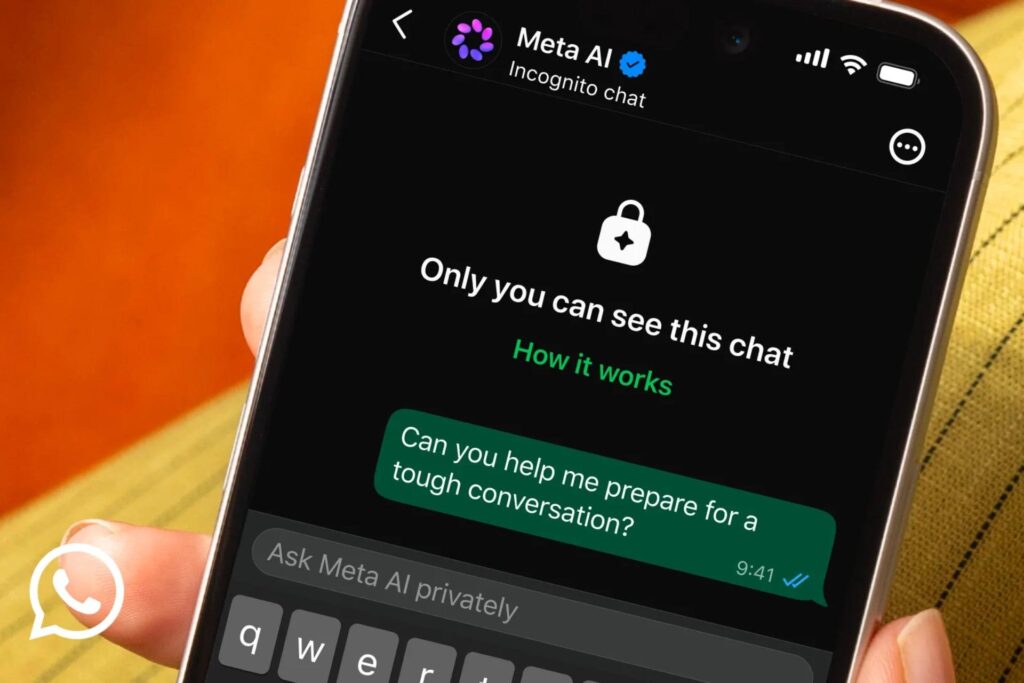
Meta Expands Its AI Strategy
WhatsApp is owned by Meta Platforms. The company has been investing heavily in artificial intelligence and wants AI assistants to become a regular part of its digital ecosystem.
Meta has been adding AI capabilities across several of its major platforms.
The wider strategy is based on the idea that people will increasingly use AI for everyday activities.
These activities can include
• Finding quick answers
• Learning new subjects
• Creating ideas
• Writing content
• Planning activities
• Solving problems
• Getting recommendations
WhatsApp is an important part of this strategy because billions of people already use the platform for daily communication.
Adding AI directly into WhatsApp makes the technology easier to access.
A New Way to Use AI
The introduction of private AI conversations could change the way people interact with chatbots.
Some users may currently avoid asking certain questions because they are worried about privacy.
A student may want help with a personal learning question. A professional may want to explore a private work idea. Another person may simply want to ask an unusual question without keeping it in their normal chat history.
A temporary AI conversation can make these situations feel more comfortable.
This could encourage more people to experiment with artificial intelligence.
Who Could Benefit From the Feature
The feature could appeal to many different groups.
Students may use private AI chats for learning and research.
Professionals may use them for brainstorming and problem solving.
Business owners may want temporary discussions about ideas and planning.
Young users may appreciate having more control over their digital footprint.
Other users may simply prefer conversations that do not remain visible in their normal history.
Possible uses include
• Learning and education
• Private brainstorming
• Writing assistance
• Language practice
• General questions
• Planning
• Creative ideas
The appeal comes from combining the convenience of AI with a greater sense of privacy.
Privacy Could Become a Major AI Feature
Technology companies have spent years competing over faster and smarter AI systems.
Now another type of competition is developing.
Companies may increasingly compete over privacy.
Users want AI assistants that are not only intelligent but also trustworthy and easy to control.
This means future AI products could offer more options for temporary conversations data controls storage settings and privacy preferences.
Incognito conversations could be an early example of this wider change.
The Importance of User Trust
Trust is essential for the future of artificial intelligence.
People may stop using an AI service if they believe their personal information is not handled responsibly.
A powerful chatbot is not enough if users do not feel comfortable sharing information with it.
Privacy can therefore become an important part of the overall user experience.
WhatsApp appears to recognize this connection.
By giving users a more private option the platform can make AI feel less intimidating and more accessible.
Businesses Could Also Use Private AI
The feature could have value beyond individual users.
Businesses are increasingly using AI for productivity customer support research writing and brainstorming.
However companies can be cautious about using AI when conversations involve private business information.
A more temporary AI experience could potentially make some professional users more comfortable.
Businesses will still need to understand the specific privacy protections and policies that apply to their use of AI.
Privacy settings can reduce certain concerns but users should always understand how a service handles information before sharing sensitive details.
Students and Education
Education is another area where private AI conversations could become useful.
Students are increasingly using AI to understand difficult subjects practice languages generate ideas and explore new topics.
Some students may feel more comfortable asking questions privately.
A temporary conversation can create a less intimidating environment where students can explore topics without worrying about keeping every question in their normal chat history.
This could encourage greater experimentation with AI tools.
At the same time students should continue to use AI responsibly and verify important information.
The Wider Technology Industry
WhatsApp is not the only company thinking about private AI.
Technology companies are increasingly exploring temporary chats private modes and stronger data controls.
If users respond positively to WhatsApp’s approach other platforms may introduce similar features.
This could eventually create a new standard for AI services.
Instead of treating permanent storage as the default companies may give users more choices.
Those choices could include
• Temporary AI conversations
• Custom storage controls
• Privacy settings
• Data management options
• Greater control over conversation history
The result could be a technology environment where users have more control over their interactions with AI.
Privacy Concerns Still Remain
Although the new feature may provide additional privacy controls users should not assume that any digital service offers complete privacy.
Technology systems continue to face cybersecurity risks.
Users should still be careful about sharing extremely sensitive information online.
Privacy also depends on company policies and technical systems.
For this reason people should understand the privacy terms of any AI service they use.
The introduction of a private mode is a positive development but responsible technology use remains important.
AI Is Becoming Part of Communication
WhatsApp began as a simple messaging platform.
Over time it expanded into a much larger communication service with voice calls video calls business features communities and other tools.
Artificial intelligence is now becoming another important part of this transformation.
People increasingly expect their communication apps to do more than send messages.
They want help with information planning writing translation recommendations and other everyday tasks.
AI can provide many of these services directly inside an app people already use.
This makes artificial intelligence easier to access for millions of users.
What Could Come Next
The introduction of incognito AI conversations could be only the beginning.
As AI becomes more deeply connected with messaging apps users may demand even stronger privacy controls.
Future features could give people more control over how conversations are stored and how information is used.
Possible developments could include
• More customizable AI privacy settings
• Temporary AI conversations
• Better data controls
• More transparent privacy information
• Greater control over conversation history
These developments could help create a better balance between AI convenience and personal privacy.
A New Direction for AI
The technology industry is entering a new stage.
In the early development of AI much of the attention focused on intelligence speed and capability.
Now the conversation is becoming broader.
People also want safety privacy transparency and control.
This change is important because AI is moving into more personal areas of everyday life.
People may eventually use AI to discuss career goals financial planning education personal projects and other important subjects.
The more personal AI becomes the more important privacy will become.
Final Thoughts
WhatsApp’s introduction of incognito conversations for AI chats highlights an important change in the relationship between artificial intelligence and privacy.
AI is becoming a normal part of digital communication. At the same time users are becoming more aware of the importance of protecting their personal information.
The new feature gives users a more temporary and private way to interact with AI. This could encourage people who have been hesitant about AI to try it more freely.
For WhatsApp and Meta the move also supports a wider strategy of bringing artificial intelligence into everyday communication.
For users the biggest benefit may be greater control.
The future of AI will not depend only on how intelligent these systems become. Trust privacy convenience and transparency will also play a major role.
If private AI conversations become popular they could influence other technology companies and eventually become a standard feature across messaging and AI platforms.
WhatsApp is now combining communication artificial intelligence and privacy in one experience.
As AI continues to become part of everyday life the ability to use it with greater confidence and control could become one of the most valuable features technology companies can offer.